Bermondsey High Street Removals for Independent Shop Relocations
Relocating an independent shop on Bermondsey High Street is rarely a simple matter of boxing things up and loading a van. There are opening hours to protect, stock to safeguard, awkwardly shaped fixtures to move, and usually a trading schedule that cannot afford much disruption. That is why Bermondsey high street removals for independent shop relocations need to be planned with care, local awareness, and a calm, practical approach.
If you are shifting a boutique, deli, barber, studio shop, convenience store, or small specialist retailer, the difference between a smooth move and a stressful one often comes down to timing, access, packing, and having the right vehicle and crew in place. In this guide, we will walk through how these moves work, what to watch out for, where the real risks sit, and how to keep your business moving while the premises change around you. No fluff. Just the useful stuff.
Why Bermondsey High Street Removals for Independent Shop Relocations Matters
Independent shops live and die by continuity. A high street move is not just about moving objects from A to B; it is about protecting trade, preserving stock condition, keeping staff informed, and ensuring the new unit opens with as little friction as possible. In Bermondsey, where streets can be busy, loading spaces may be tight, and access windows can be precious, a rushed move can quickly turn expensive.
For a small business, even a half-day delay can mean lost sales, missed appointments, frustrated customers, and a messy restart. That is before you factor in the awkward bits: fitting rails, glass display units, fridges, tills, signage, shelving, mirrors, or specialist equipment. Some of those items can look light enough until you are halfway down a staircase and wondering why you agreed to do it yourselves. Truth be told, many shop relocations feel easier on paper than they do on a Friday afternoon in real life.
What makes this kind of removal unique is the mix of commercial urgency and delicate handling. A house move can be delayed by a few hours without ruining the purpose of the day. An independent retailer often cannot. That is why structured planning, proper packing, and the right transport matter so much.
It also helps to think beyond the move itself. A good relocation plan supports your stock flow, customer service, and reopening date. If the move is handled well, the shop can feel settled faster, staff can work normally sooner, and your reopening feels intentional rather than improvised.
If you are comparing commercial support options, services such as commercial moves can be a good fit for shops that need broader business relocation support, while man and van style help may suit smaller, lighter relocations with less equipment.
How Bermondsey High Street Removals for Independent Shop Relocations Works
A well-run shop relocation usually follows a clear sequence. It starts long before the van arrives. The better organised the pre-move stage is, the less likely you are to hit delays on the day.
1) Survey the premises and the inventory
First, identify what is moving. That sounds obvious, but many relocations go sideways because nobody makes a proper list. Separate the move into categories: stock, fixtures, paperwork, tills, display items, delicate products, storage units, packaging materials, and any items that must be dismantled. A single shelf unit can be a five-minute job or a thirty-minute headache, depending on how it has been fixed in place.
2) Confirm access and timing
High street access is often the hidden pressure point. You may need to work around delivery hours, pedestrian flow, parking restrictions, or narrow loading points. A move that starts after closing time can be ideal for some shops, but not all. Others benefit from a staged relocation over two sessions. Let's face it, a clever timetable can save more money than a bigger van ever will.
3) Pack by function, not just by room
For independent retailers, a functional packing system is usually better than a room-by-room system. Group till equipment together. Keep opening-day stock separate from archive stock. Mark fragile items clearly. Put essentials in a first-open box so you can trade sooner. This is the kind of detail that stops the new shop from feeling like a warehouse on day one.
4) Use appropriate vehicles and lifting support
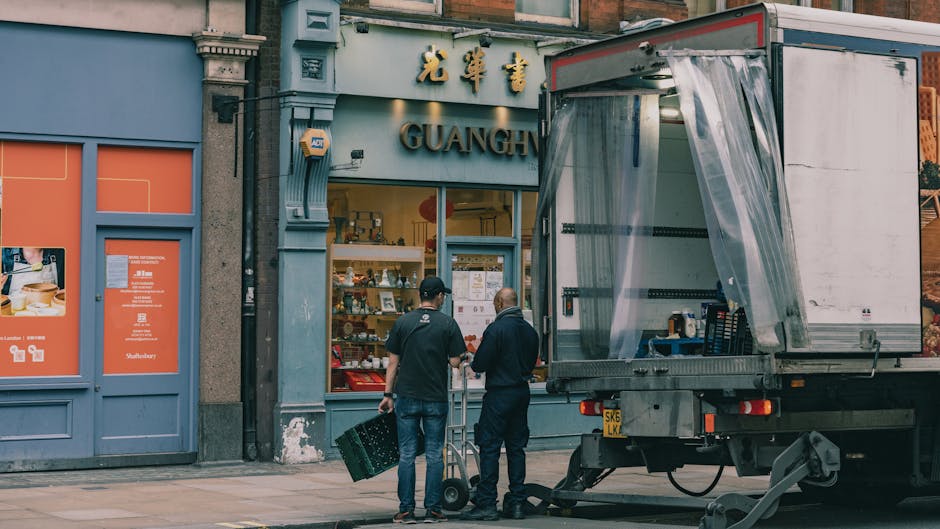
Some relocations only need a small crew and a compact vehicle. Others need more structured transport, such as a moving truck or even removal truck hire where volume, weight, or repeated trips make a larger vehicle more efficient. If the move includes a lot of boxed stock, fitted shelving, or display units, that decision matters a great deal.
5) Unload in the order that supports trading
At the destination, the priority is not just emptying the van. It is setting up the shop so the most important areas can function first. Till point, key stock, staff space, and customer-facing areas usually come before non-essential items. If you have ever spent twenty minutes searching for the card reader while a customer waits, you will know why this matters.
If the relocation involves unpacking help too, services like packing and unpacking services can reduce pressure significantly, especially when the team is already juggling supplier calls and reopening tasks.
Key Benefits and Practical Advantages
The value of professional shop removals is not just physical labour. It is operational stability. Good removal support gives small businesses room to breathe during what can otherwise be a chaotic week.
- Less trading disruption: structured packing and timed loading can reduce downtime.
- Better protection for stock and fixtures: proper wrapping and handling lowers the risk of damage.
- More efficient labour: the right number of people, with the right equipment, usually beats a last-minute DIY scramble.
- Cleaner handover and setup: a controlled move makes it easier to reopen tidily.
- Reduced stress for owners and staff: everyone can focus on the business rather than wrestling with a sofa-sized display cabinet.
There is also a reputational benefit. Customers notice when a business relocates smoothly. They notice when the reopening date is honoured, when stock appears where it should, and when the new unit feels ready rather than half-finished. That sense of order carries weight on a high street, especially for independents competing on service and atmosphere.
In many cases, the move also creates a chance to reset the shop layout. A relocation can be a useful moment to rethink customer flow, product placement, storage efficiency, or back-of-house organisation. Small businesses often discover that a move is the best time to improve how the shop works, not just where it sits.
Who This Is For and When It Makes Sense
This kind of removal is most relevant for independent retailers who value speed, care, and a practical commercial mindset. That includes:
- boutiques and clothing shops
- specialist food retailers and delis
- barbers, salons, and grooming studios with retail stock
- gift shops and lifestyle stores
- small appliance or household goods retailers
- local galleries or creative retail spaces
- online-first businesses moving into a physical showroom
It also makes sense when the shop is moving between short distances in Bermondsey or nearby parts of south-east London. Shorter distances do not automatically mean easier moves. In fact, they can create a false sense of simplicity. Local moves still need access planning, careful handling, and enough capacity to avoid multiple unnecessary trips.
If you only have a few fixtures and a limited stock count, a light-touch option such as a man with van arrangement may be enough. If the relocation is larger, includes furniture, or needs a more structured workflow, you may prefer a broader service such as office relocation services style support adapted to a retail setting.
It makes sense to bring in removal help when any of the following are true:
- the shop cannot be closed for long
- there are fragile or awkward items
- the premises have poor access
- you need help dismantling and reassembling items
- staff are already stretched by stock take, supplier handovers, or launch prep
Step-by-Step Guidance
Here is a practical route through the move, stripped of unnecessary drama.
- Set the move date and reopening target. Work backwards from the date you want to trade again.
- Build a moving inventory. Separate essentials, fragile items, bulky items, and things to discard.
- Measure everything. Doorways, shelving, display units, van access, lift sizes if relevant. The boring bit saves the headaches.
- Book the right support. Choose based on volume, access, and handling needs. For smaller collections or furniture-only items, furniture pick-up can be helpful when you need specific items taken care of quickly.
- Prepare packing materials. Boxes, tape, blankets, labels, bubble wrap, stretch wrap, and markers all matter.
- Pack the shop methodically. Label by destination zone and priority level.
- Protect the fragile stuff. Glass, ceramics, mirrors, electronics, and branded display items deserve extra time.
- Load in a sensible order. Put the first items needed at the new site somewhere accessible.
- Check the old unit. Make sure nothing is left behind, including chargers, keys, stock, or receipts tucked into drawers. It happens more than people admit.
- Set up the new shop for opening. Focus on safety, customer flow, and the till point first.
A small but important point: keep one person responsible for decision-making on the day. Not every question needs a committee. Where should the display stand go? Which stock is priority? Who has the alarm code? A single point of contact prevents that awkward group silence where everyone is looking at everyone else.
Expert Tips for Better Results
A few experienced habits can make a real difference.
Start with the items that cause the most delay. Large fittings, wall-mounted pieces, and wired equipment often take longer than expected. Deal with those early.
Use a reopening box. Put in the essentials needed to trade on day one: till items, pens, charging cables, tape, scissors, keys, basic cleaning supplies, and any key paperwork. That box should be unmistakable. Bright tape helps.
Photograph displays before dismantling. A quick phone photo of shelf layouts, merchandising, and cable routes can save a lot of guesswork later. Not glamorous, but very useful.
Keep stock separated by urgency. Opening-day stock, reserve stock, and archived items should not end up in one large anonymous pile. That is a recipe for slow unpacking and grumpy faces.
Plan for awkward weather. A wet Bermondsey afternoon can turn a short loading gap into a slippery nuisance. Have covers ready, especially if boxes are being moved in and out of a vehicle repeatedly.
Think about the customer experience on reopening day. A clean threshold, visible signage, and a clear till area go a long way. People notice the atmosphere of a shop within seconds. Sometimes it is the smell of fresh paint, sometimes the neatness of the counter, sometimes just the sense that the place is ready.
And a small one from experience: keep snacks and water available for the team. A move day can get surprisingly long, and everyone works better when they are not running on fumes and vending-machine optimism.
Common Mistakes to Avoid
Most relocation problems are avoidable. They usually come from underestimating time, overestimating what can be carried by hand, or failing to plan for access.
- Leaving packing too late. A shop packed in a rush is harder to reopen from.
- Not measuring larger items. A display unit that does not fit through the doorway becomes a problem very quickly.
- Forgetting insurance and handling responsibility. You want clarity on who is moving what and how it is being protected.
- Ignoring loading restrictions or access limits. High street moves are often decided by the pavement outside, not the room inside.
- Mixing stock categories together. Essentials, fragile items, and dead stock should not end up in the same stack.
- Assuming one van trip will do it all. That can be optimistic. Sometimes charmingly so, but still optimistic.
- Not preparing the new unit in advance. If the shop is not ready to receive items, you simply move the mess.
One subtle mistake is failing to protect the brand feeling of the business. Independent shops often depend on presentation. If a move damages display pieces, signage, or layout logic, the reopening can feel off even when the stock is intact. That is harder to quantify, but very real.
Tools, Resources and Recommendations
You do not need a complicated toolkit, but you do need the right basics. A smooth retail relocation usually depends on the simple stuff being available at the right time.
Useful packing and moving tools
- strong double-walled boxes for stock
- marker pens and pre-printed labels
- packing tape and tape dispensers
- bubble wrap, paper wrap, and stretch wrap
- furniture blankets for fixtures and display pieces
- zip bags for screws, bolts, and small fittings
- trolleys or sack trucks for heavier loads
- basic cleaning supplies for the old and new premises
For shops moving bulkier equipment or large display items, a larger vehicle may be the practical answer. That might mean a moving truck or a vehicle sourced via removal truck hire, depending on the scale of the load and the access constraints.
If the relocation is part of a wider business transition, you may also want to compare support options with commercial moves and related relocation services. For customers who simply need smaller load support or a fast collection of specific items, a straightforward man and van arrangement may still be the cleanest fit.
There is no magic tool that makes a difficult move easy, but there are tools that stop small problems turning into big ones. That is usually enough.
Law, Compliance, Standards, or Best Practice
For shop relocations in London, the main concern is not usually a single dramatic legal hurdle. It is doing the practical things properly and avoiding preventable issues. That means paying attention to traffic and loading restrictions, keeping pathways safe, managing manual handling sensibly, and making sure the new premises are ready for trading in a lawful, safe way.
Best practice typically includes:
- clear responsibility for access arrangements and keys
- safe lifting and handling for staff and removal crews
- secure packaging for fragile or valuable stock
- clear labelling of hazardous or sensitive items, where relevant
- checking that the new premises are ready for occupancy and trading
- keeping records of equipment, fixtures, and stock moved
If your shop deals with electrical equipment, food products, temperature-sensitive goods, or valuable items, you may need additional care beyond a standard retail move. The same goes for any stock that requires specific storage or handling conditions. In those cases, it is sensible to discuss the details early rather than hoping to sort them on the day. Hope is not a moving strategy, unfortunately.
Insurance is another area to clarify in advance. Do not assume everything is covered in the same way. Ask who is responsible for what during loading, transit, and unloading. If a piece of display furniture or a specialist item matters to the customer experience, it deserves an explicit plan.
Options, Methods, or Comparison Table
Different relocation methods suit different shops. The right choice depends on size, access, stock volume, and how much assistance you want with the physical work.
| Option | Best for | Strengths | Watch-outs |
|---|---|---|---|
| Small van support | Light relocations, a few fixtures, limited stock | Flexible, simple, often efficient for short moves | Can require multiple trips if the load is larger than expected |
| Man and van service | Smaller shops or partial relocations | Handy for mixed loads and awkward access | Not always ideal for bulky or high-volume shop contents |
| Moving truck | Large stock volumes, multiple fixtures, fuller relocations | Better capacity, fewer trips, more efficient loading | Needs suitable access and planning |
| Removal truck hire | Moves with significant furniture or heavier commercial items | Good when capacity and transport control matter | Usually needs stronger pre-planning and loading discipline |
If your move is just a tidy relocation of a small front-of-house setup, a lighter service may be more than enough. If you are dealing with shelving, counters, stock, storage units, and back-room furniture, a more capable commercial option usually pays for itself in reduced stress and fewer delays.
Case Study or Real-World Example
Imagine a small independent homeware shop on Bermondsey High Street moving a short distance to a slightly bigger unit. The owners have glassware, framed prints, shelving, two display tables, a till system, and seasonal stock that needs to be live on reopening day.
They begin by sorting stock into three groups: opening-day items, reserve stock, and items to store for later. The shelving is photographed before dismantling, screws are sealed in labelled bags, and fragile stock is wrapped in layers rather than tossed into random boxes. The move is scheduled after closing, with the new unit pre-cleaned and the floor plan agreed beforehand.
On the day, the crew loads the heaviest items first, then the boxed stock, then the delicate display pieces. The till box is kept separate and placed somewhere easy to reach. A couple of small snags appear, of course - one stand is heavier than expected and a cable is missing. That happens. But because the essentials were planned properly, the shop is still able to reopen on time the next morning.
The owners later say the most helpful part was not just the lifting. It was knowing what to unpack first and not having to make a hundred tiny decisions while tired. That is the real difference a well-managed move makes.
Practical Checklist
Use this before moving day. It is a simple list, but it catches a lot.
- Confirm move date, access times, and reopening target
- Measure doors, aisles, stairways, and larger items
- Make a full inventory of stock, fixtures, and equipment
- Separate fragile, valuable, and priority items
- Pack a first-open box for day-one trading
- Label boxes by category and destination zone
- Photograph displays and cable layouts before dismantling
- Arrange the right vehicle and crew size
- Check insurance and handling responsibility
- Prepare the new premises for receiving stock
- Keep keys, codes, and contact details in one place
- Do a final sweep of the old unit before handover
If you want a simple next step, start with the list above and work backwards from your planned opening day. That alone can take a lot of pressure out of the process.
Get a free quote today and see how much you can save.
Conclusion
Bermondsey high street removals for independent shop relocations are at their best when they are organised, calm, and tailored to the business rather than treated like a generic transport job. Independent retailers have enough to think about without also having to guess which box contains the till lead or whether the display stand will fit through the front door.
With the right plan, the right moving support, and a bit of honest preparation, a relocation can feel like a reset rather than a setback. You protect stock, preserve trade, and give the new space the best possible start. And that, to be fair, is what most shop owners really want: a move that feels controlled, not chaotic.
Take your time with the planning, trust the practical details, and give yourself enough room to do it properly. The new shop should feel like progress. It can.
Frequently Asked Questions
What is Bermondsey high street removals for independent shop relocations?
It refers to the moving and transport support needed when an independent shop relocates on or around Bermondsey High Street. It usually includes packing, loading, transit, unloading, and sometimes dismantling or setup help.
How far in advance should I book a shop relocation?
As early as you can, especially if the move needs a specific time window, larger vehicle, or evening access. Even a short local move benefits from advance planning because high street access can be limited.
Can I move an independent shop in one day?
Sometimes, yes. Smaller shops with simple stock and light fixtures can often move in a single day. Larger relocations or shops with awkward items may need a staged approach to keep things manageable.
What items need the most protection during a retail move?
Glassware, mirrors, electronics, display furniture, branded signage, and fragile stock are usually the biggest concern. Anything that affects presentation or trading should be packed carefully and labelled clearly.
Is a man and van service enough for a shop relocation?
It can be, if the load is small and access is straightforward. For larger shops, bulkier fixtures, or more stock, you may need something with more capacity such as a moving truck or removal truck hire.
How do I keep my shop open for as long as possible during a move?
Pack in stages, prioritise essential stock, and plan the load order around what you need first at the new site. Good timing and clear labelling make a bigger difference than most people expect.
What should go into a first-open box?
Put in the till essentials, keys, chargers, stationery, tape, scissors, basic cleaning supplies, and any paperwork needed for the first day. Keep it separate and easy to find.
Do I need to dismantle display furniture before the move?
Often yes, especially if the item is large, awkward, or likely to be damaged in one piece. Taking a few photos before dismantling can make reassembly much easier later.
What is the main risk of a rushed high street move?
The main risks are damage, delays, lost stock, and slower reopening. A rushed move can also leave the new premises feeling unfinished, which affects both staff and customers.
How do I choose between commercial moves and a smaller moving option?
Think about volume, complexity, and the amount of support you need. If the relocation includes more stock, fixtures, and logistics, commercial moves may be the better fit. If it is a lighter move, a simpler service may be sufficient.
What should I check at the new shop before moving day?
Confirm access, floor space, cleanliness, power points, and any areas where stock or fixtures will be placed. A ready destination makes unloading far smoother and avoids piling items in the wrong place.
Do independent shops need special packing and unpacking help?
Not always, but it is very useful when the shop has fragile stock, a tight reopening deadline, or a lot of small items that need sorting quickly. Packing and unpacking services can save a lot of time and reduce mistakes.